Hope and Renewal in the Promise of New Creation

Embracing the Promise of New Heavens and a New Earth
Naming What Must Die
History comes alive when we realize that every grand shift in civilization begins with the death of an old way of life. Picture yourself walking through ancient Rome, a city that once stood as the epicenter of power, culture, and innovation. Now, imagine the crumbling ruins of its once mighty empire, relics of a world that had to die for something new to emerge. In the same way, our spiritual journey toward the promise of new heavens and a new earth necessitates acknowledging what must pass away.
The Apostle Peter speaks of this transition in 2 Peter 3:13, where he reminds us, "But according to his promise we are waiting for new heavens and a new earth in which righteousness dwells." The old must give way to the new, not just in cosmic terms but within us personally. It requires the end of old identities steeped in self-reliance and false securities that tether us to the present broken world. These include the relentless pursuit of material gain, the masks we wear to hide our insecurities, and the barriers we erect to shield ourselves from vulnerability.
As we reflect on what needs to die, consider the destructive patterns that hold us captive. These can be habits of mind that distort our view of ourselves and others, or attitudes that foster division rather than unity. The scriptures urge us to leave behind the ephemeral for the eternal, to trade transient pleasures for lasting joy. Isaiah 65:17 gives a prophetic vision, "For behold, I create new heavens and a new earth, and the former things shall not be remembered or come into mind." Here, we are invited to embrace a future crafted by the divine.
This journey is not an easy one. It demands an honest assessment of our attachments to the past and the courage to let go. The New Testament is replete with teachings of dying to one's self as a precursor to true life. In considering these ancient texts, we find a mirror reflecting the need to relinquish what binds us to a world on the brink of transformation. It's a call to courage, to be active participants in the narrative God is writing—a story that culminates in renewal and restoration.
The Descent into Death
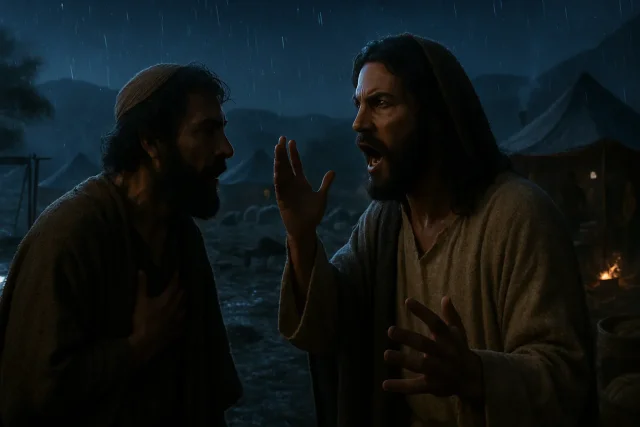
Then comes the dying: a painful process that strips away the familiar comforts of our current existence. It echoes the experience of Jesus in Gethsemane, where the weight of impending sacrifice bore down upon Him. Imagine the quiet night air, the rustling of leaves, and the palpable tension of the moment—a scene that invites us to sit with our own Gethsemane moments. Here is where we face resistance, both internal and external, against the very notion of surrender.
This descent feels like an unraveling, as if the threads of our well-constructed identities are being pulled apart. It's the moment you realize that the security of a steady paycheck, the accolades of your career, or the comfort of routine can no longer define you. Picture the bustling streets of your city, filled with people rushing to and fro, all clinging to their own certainties. The stones cry out a reminder that everything must change.
In these moments, we are confronted with the ego's death—the relinquishment of control and the acknowledgment of our dependence on something greater. This is often met with fear and apprehension, mirrored in the anxious eyes of a student who doubts their ability to graduate or the parent unsure of how to navigate the next chapter of their child's life. Yet, in this letting go, there is also a paradoxical peace, a strange comfort in knowing that we are not alone in this journey.
The archaeological evidence tells us of civilizations that have risen and fallen, each leaving behind stories of growth through adversity. As we grapple with our own descent, we gain solidarity with the ancients, understanding that this is not the end but a necessary step toward something more profound. The narrative of death leading to life is woven throughout scripture, reminding us that the resurrection power we seek is often preceded by the darkest of nights.
Holy Saturday Waiting
In the darkness: the liminal space between what was and what will be, akin to Holy Saturday's waiting. It's a time of stillness, where the echo of the past lingers, and the promise of the future feels just out of reach. This is where the disciples found themselves, grappling with the loss of Jesus, uncertain of what lay ahead. The silence is profound, the kind that fills a room after the last note of a song has faded.
Imagine the wilderness seasons of life, those periods where direction seems lost, and purpose feels elusive. It's the waiting room of a hospital where time stretches interminably, or the quiet before dawn in a sleepless city. Such moments test our patience and force us to confront the void left by what has ended. Yet, it's in this silence tha
Continue Your Bible Study
Explore more lessons and deepen your understanding of scripture
View All Lessons Ask AI a Question